4 min read
In China snuff was not carried in boxes. It went into small bottles, and those bottles grew into one of the most admired art forms of the Qing dynasty (1644 to 1911).
Why a bottle?
Chinese elites believed the new powder had medicinal properties, and at first they kept it in the cylindrical bottles used for medicines, according to the Philadelphia Museum of Art. The Metropolitan Museum of Art describes a snuff bottle as a small container with a corked stopper, easy to carry and airtight enough to keep the snuff fresh and flavourful.
The stopper and its spoon
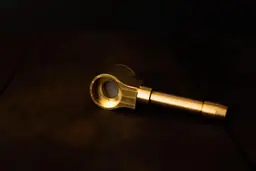
The Bowers Museum notes that the earliest recorded Chinese snuff bottles had small openings sealed with cork lids, and that the first known example of this type dates to 1644, the first year of the Qing dynasty. Makers then added stoppers with a small spoon attached, usually bone or ivory, to dispense the snuff. Almost all bottles ended up with a matching lid and a cork stopper from which a spoon hung.
A court fashion
The Kangxi Emperor (reigned 1661 to 1722) and the Qianlong Emperor (1735 to 1796) are the best-known imperial snuff takers, says the Bowers Museum. Members of the Qianlong court often gave bottles to one another as gifts, and by the middle of the nineteenth century a bottle had become a must-have accessory for Chinese gentlemen and anyone who hoped to be taken for one, according to the Philadelphia Museum of Art. The Met adds that the habit spread slowly and steadily, and by 1800 it had reached practically every level of society.
Materials and craft
The Met says bottles were made from stone, porcelain, ivory, lacquer, metal and much more, using almost every art form China had developed. Glass was a favourite. It was cheaper than jade, agate or rock crystal, and a good glass copy of a precious stone could pass all but the closest inspection, according to the Philadelphia Museum of Art. Jesuit missionary-artists at the Qing court introduced techniques such as faceting, and so-called Peking glass was known for its vivid colours and could be carved. The Bowers Museum adds that frosted glass bottles painted on the inside appeared in the eighteenth century, and by the twentieth century delicate inside-painted bottles dominated the collectors' market, as the Philadelphia Museum of Art notes.
Box or bottle?
In China the bottle took the place that the box held in Europe. For the European story, see our history chapter on snuffboxes and the art of the pinch, and for everyday boxes, bullets and spoons see Snuffboxes, bullets and spoons.
Sources
- The Metropolitan Museum of Art: Small Delights, Chinese Snuff Bottles
- Philadelphia Museum of Art: Snuff Bottle and Stopper, 1750 to 1850
- Philadelphia Museum of Art: glass bottle imitating precious stones
- Philadelphia Museum of Art: bottle from the Qianlong court tradition
- Philadelphia Museum of Art: inside-painted bottle
- Philadelphia Museum of Art: faceted bottle
- Bowers Museum: Bottled Beauty, snuff containers of China